Summary: Pregnancy massage training lasts on average 3 to 4 days and allows practitioners to master a safe protocol, supported by 12 randomized clinical trials confirming its benefits on pain and stress.
In 2024, 660,800 babies were born in France, according to INSEE. Behind each of these births, a woman goes through nine months of physical and emotional changes. The demand for appropriate prenatal care remains strong, and prenatal massage is emerging as a concrete response to this need.
Training in pregnancy massage is not limited to learning a few gentle techniques. Pregnancy involves rapid body changes: breathing, pelvis, ribs, joints, circulation, fatigue, stress, and more. An appropriate practice therefore requires a solid understanding of the body, posture, and warning signs. For the practitioner, it is also an opportunity to stand out in a market seeking specialized skills.
Why prenatal massage is a full-fledged treatment
Pregnancy massage is not simply a light relaxation massage. A systematic review published in 2021 in the Journal of Clinical Medicine analyzed 12 randomized controlled trials involving women from 12 weeks of pregnancy onward. The main documented benefits include reduced stress, back and leg pain, depression and anxiety, increased immune response, higher levels of serotonin and dopamine, higher birth weight, and a reduced risk of preterm birth. These findings are available in the publication by Mueller and Grunwald (2021).
Other studies conducted on pregnant women suffering from depression confirm these findings: reduced leg and back pain, decreased cortisol and norepinephrine levels, and increased dopamine and serotonin levels. These women also showed a lower risk of preterm birth and gave birth to babies with higher birth weights.
These scientific data provide a strong argument for any practitioner seeking to legitimize their services. They also highlight the importance of specialized training: poorly adapted massage can cause discomfort or even pose risks.
What you will learn in a pregnancy massage training
What should you expect from a serious program? The most comprehensive training courses systematically cover several essential components.
Theoretical component:
- Physiology of touch and body changes during pregnancy
- Contraindications and warning signs (high-risk pregnancy, hypertension, preeclampsia)
- Benefits of massage for both mother and baby
- Product selection: suitable plant-based oils, precautions regarding essential oils
Practical component:
- Full prenatal massage protocol (generally 60 minutes)
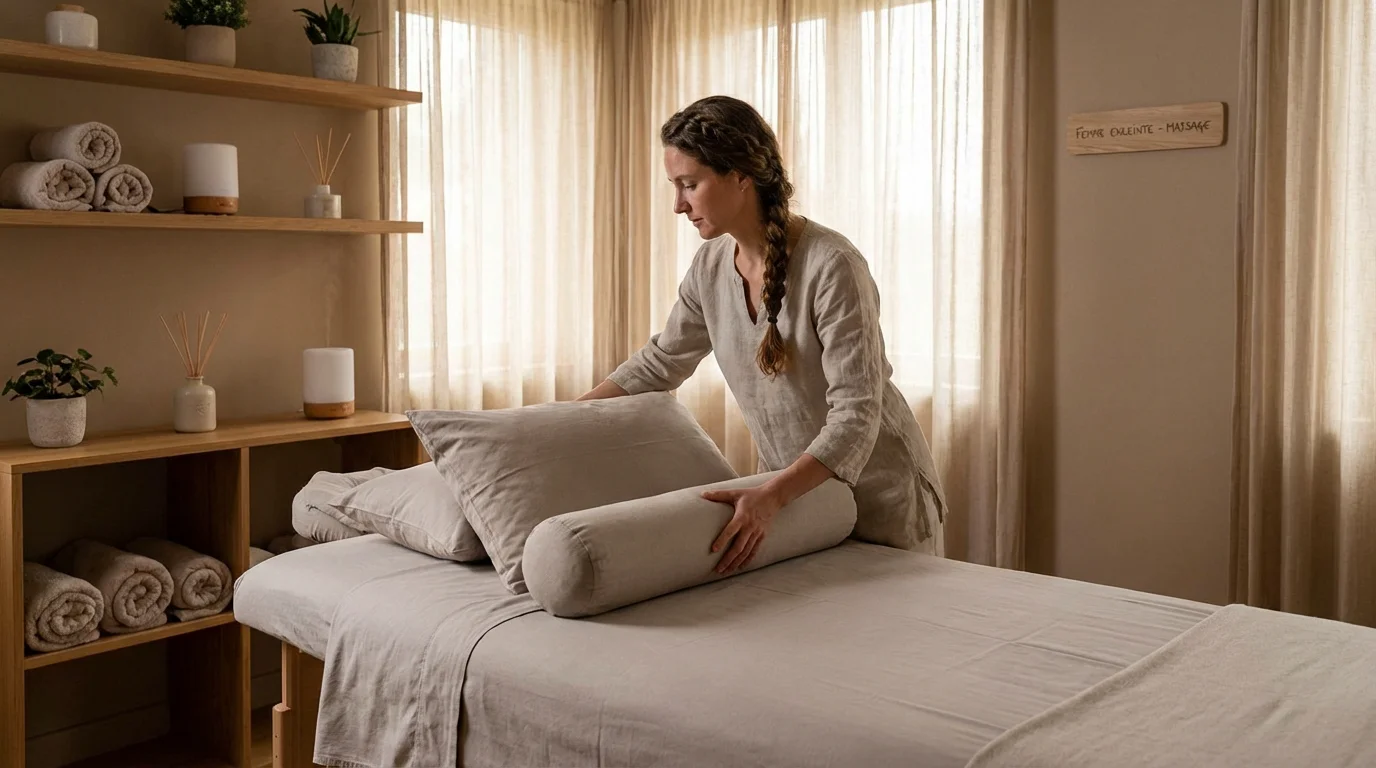
- Side-lying and semi-seated positions, use of ergonomic cushions
- Adapting treatment according to trimester and client needs
- Practitioner posture to avoid fatigue and injury
Essential precautions include obtaining prior medical approval, working with a properly trained massage therapist, using side-lying or seated positions, avoiding invasive or deep techniques, and favoring gentle, slow, and enveloping methods.
Some programs also include an entrepreneurial component, with guidance on selling services and structuring one's offer. This is an aspect we integrate into our overall approach, particularly through our resources dedicated to who this training is for and building a sustainable business.
The body–emotion–mind approach: a differentiating perspective
Most training programs focus on manual technique. However, pregnancy is not limited to a changing body; it also deeply involves the emotions and psychology of the expectant mother.
Five studies included in the systematic review by Mueller and Grunwald highlighted significant improvements in lower back pain, mood, sleep, and anxiety, with a notable reduction in cortisol and norepinephrine and a positive cumulative effect on the immune system. Effects on prenatal depression are comparable to those of psychotherapy and antidepressants. This challenges a purely muscular approach.
An integrated approach takes into account the emotional dimension of touch, the mother–baby bond, and the client's emotional safety. This body–emotion–mind approach is at the core of our vision at Obienaitre. We have developed it further in our "why train in fertility massage" article, which explores how this philosophy applies from the fertility journey onward.
Prerequisites and profiles concerned by this specialization
- Wellness practitioners and beauticians wishing to expand their clientele
- Perinatal professionals (doulas, birth companions, babywearing instructors)
- Healthcare professionals (midwives, nurses, physiotherapists)
- Individuals undergoing career transition into care and wellness professions
Prerequisites vary depending on the organization. There is no mandatory official diploma for prenatal massage, but optional certifications are offered in wellness training schools. This is why choosing a recognized training provider that issues a credible certification is essential.
Contraindications and safety framework
Documented contraindications include high-risk pregnancy, a previous preterm birth, pregnancy-induced hypertension, uncontrolled high blood pressure, sudden and severe headaches, recent injury or surgery, and recent organ transplantation.
In practice, most professionals recommend avoiding massage before the end of the first trimester as a precaution. Protocols studied in the scientific literature involve sessions of around 20 minutes, performed 1 to 2 times per week between the 16th and 36th week of pregnancy.
How to choose your training: essential criteria
- Certification and recognition: prioritize organizations holding Qualiopi certification, which attests to the quality of the training process.
- Duration and format: serious programs generally last 3 to 4 days in person.
- Practice/theory ratio: at least 60% of the time should be dedicated to hands-on practice between participants.
- Post-training support: the best programs offer ongoing support after the course.
From training to professional practice
- Offering prenatal follow-up packages (for example, one session per month from the 4th to the 8th month)
- Combining prenatal, postnatal, and baby massage to build client loyalty
- Partnering with midwives, maternity wards, or birthing centers
- Developing a premium offer including comprehensive maternity support
Frequently Asked Questions
How long does pregnancy massage training last?
The standard duration is 3 to 4 days in person, or 21 to 28 hours of training. Online formats require an additional supervised practical component to validate hands-on skills.
Do you need a diploma to practice prenatal massage?
No state diploma is required to practice prenatal wellness massage in France. However, a certification issued by a recognized training organization strengthens your credibility and reassures your clients.
Can you specialize in prenatal massage without prior experience?
Some programs accept beginners, provided they have good physical condition and a sensitivity to touch. However, a background in wellness massage greatly facilitates learning and builds confidence more quickly.
